Your hospitality group's creative team, without the hire.
One team for the menus, packaging, campaigns, location pages, and the next opening. Every piece is made to educate, convert, or retain.
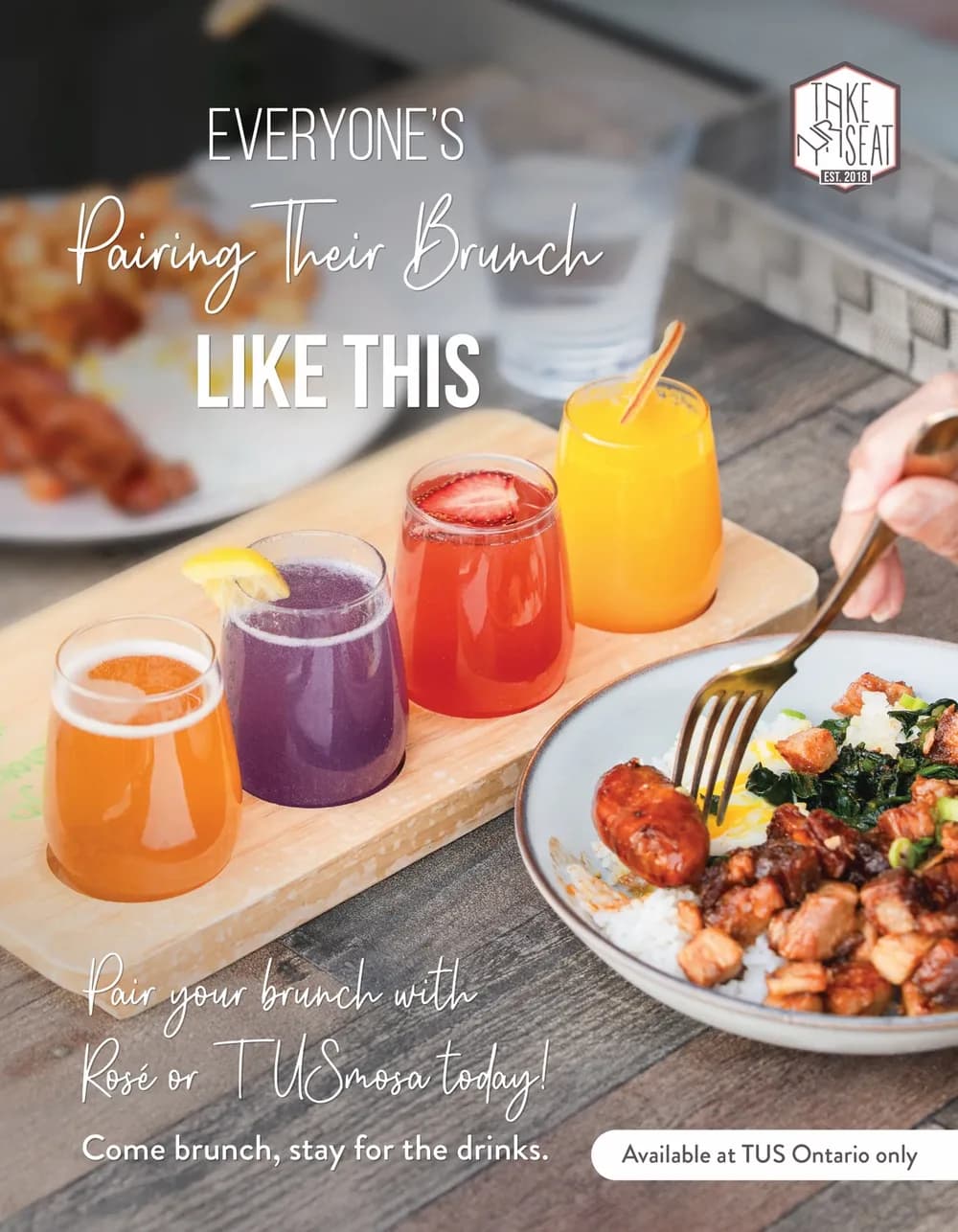
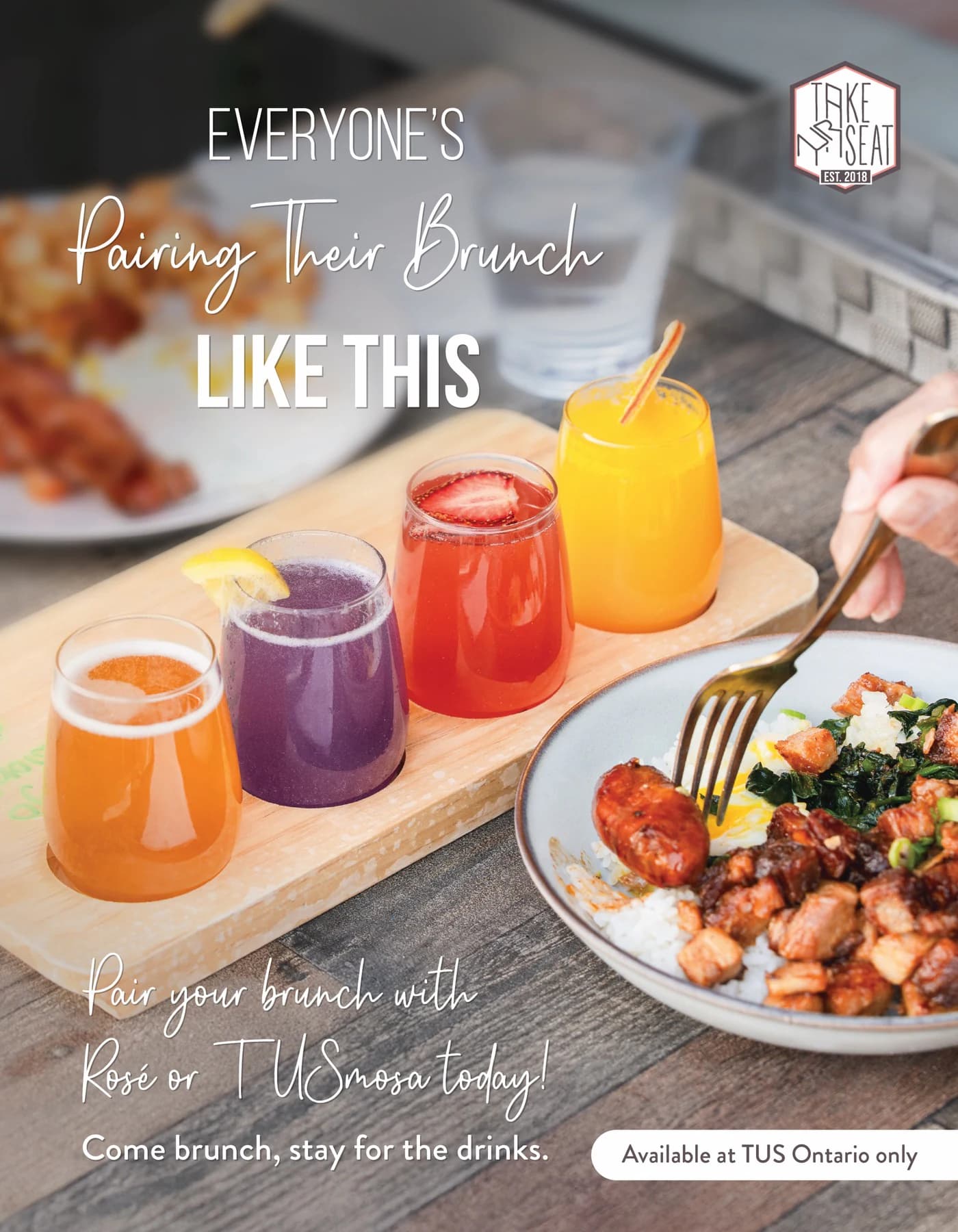
Take Ur Seat, brunch campaign. One of the brands we make the work for every week.
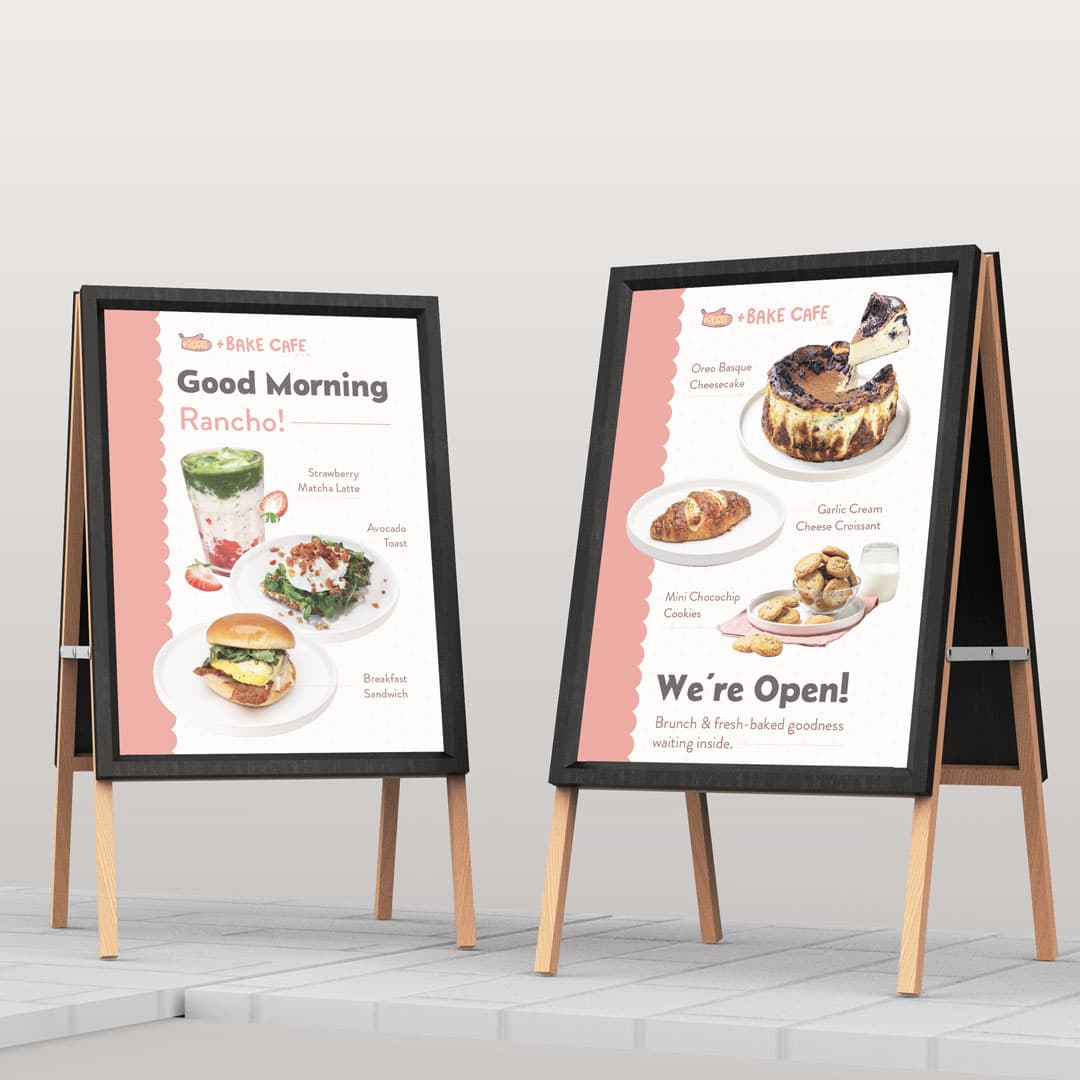
Menus, launches, and campaigns for
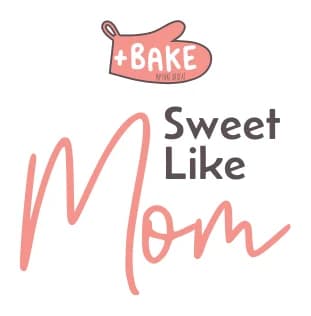
Take Ur Seat, TUS Lite, and +Bake Café: the restaurant family where we started.
The next location has to feel like yours without you in the room.
At one location, everything went through you: the menu, the signage, the post, the sticker on the box. That is why it felt like yours.
At two, it cannot.
The work spreads to whoever can turn it around this week, and no one has the standard written down.
The brand starts to look like several people made it.
Not because anyone did bad work, but because nothing was holding it together.
And you are still the last check on everything.
At eleven at night, on top of everything else the week is already asking of you.
We solved this once, from the inside.
Every design starts with what it has to do.
Before anything is designed, we agree what it is for: bringing new guests in, selling a dish, or bringing regulars back. The menu, the signage, the campaign: each one is made for that goal, with your margins, your kitchen, and your next location in view.
We work to your targets.
Targets are how we plan and how we judge our own work with you. We publish measured client outcomes only where a client has agreed the numbers.
Goal first.
Educate, convert, or retain. We agree which one a piece is for before anyone designs it.
One project lead.
One person owns your work from the brief to the final files, so nothing gets lost between handoffs.
One restaurant group.Three concepts.One creative team.
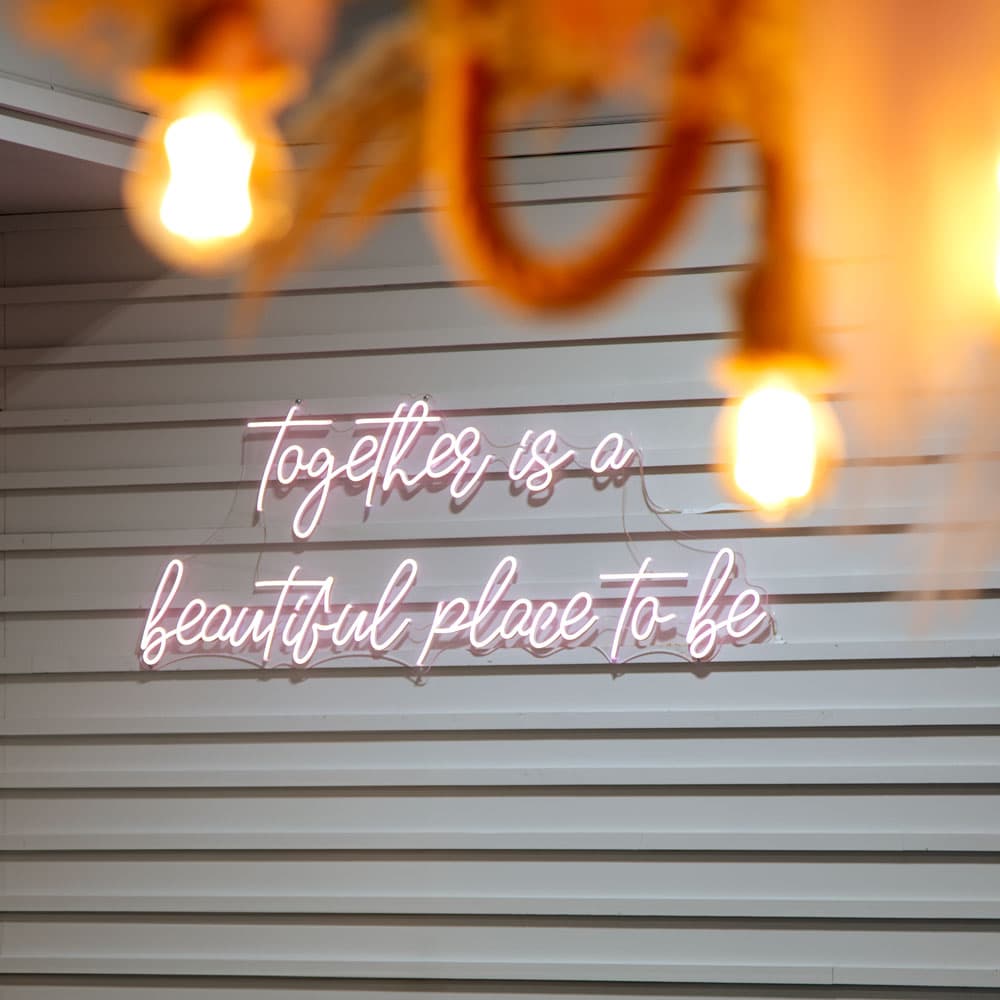
Make It Urs began inside the Take Ur Seat family: the flagship, then TUS Lite, then +Bake Café. Each concept has its own look, and every menu, screen, and sticker for all three comes from the same team.
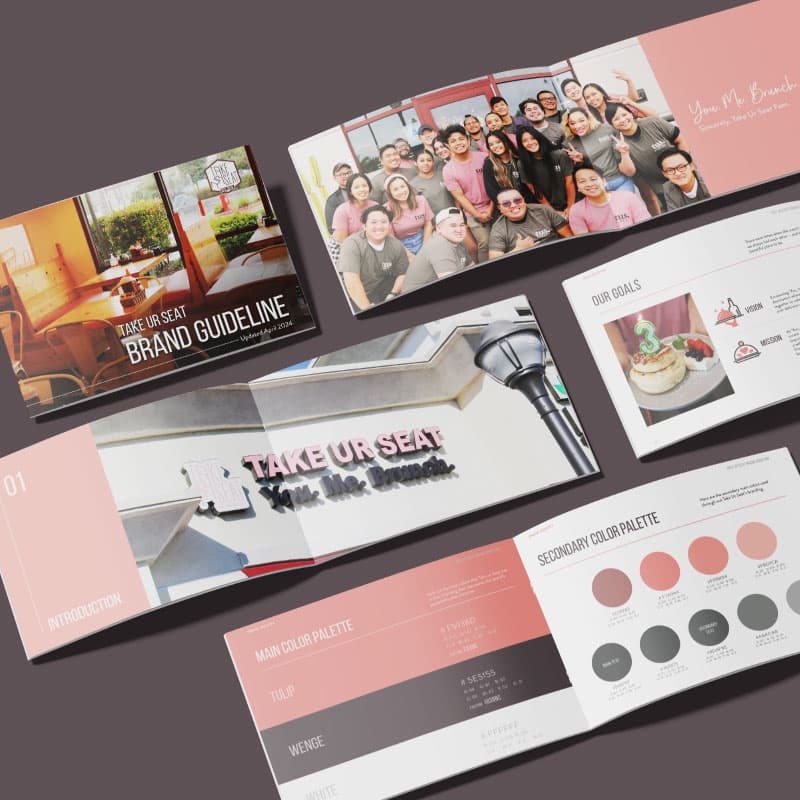
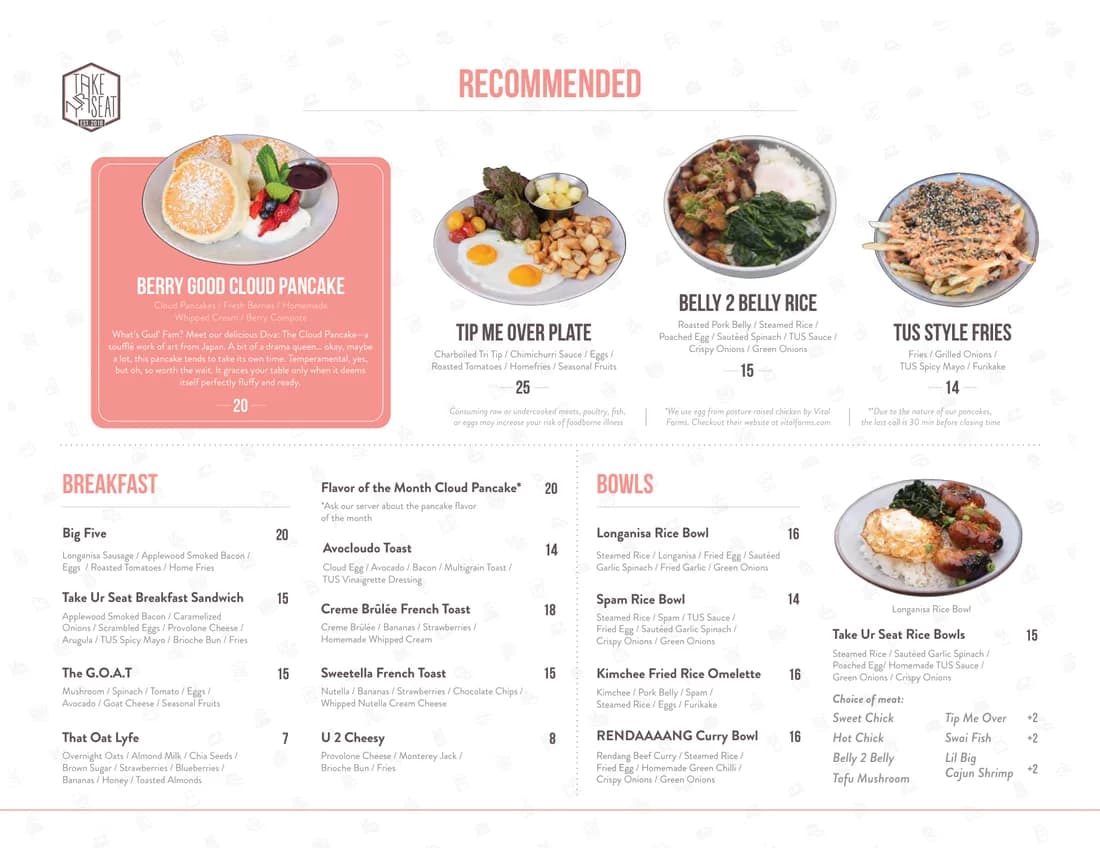
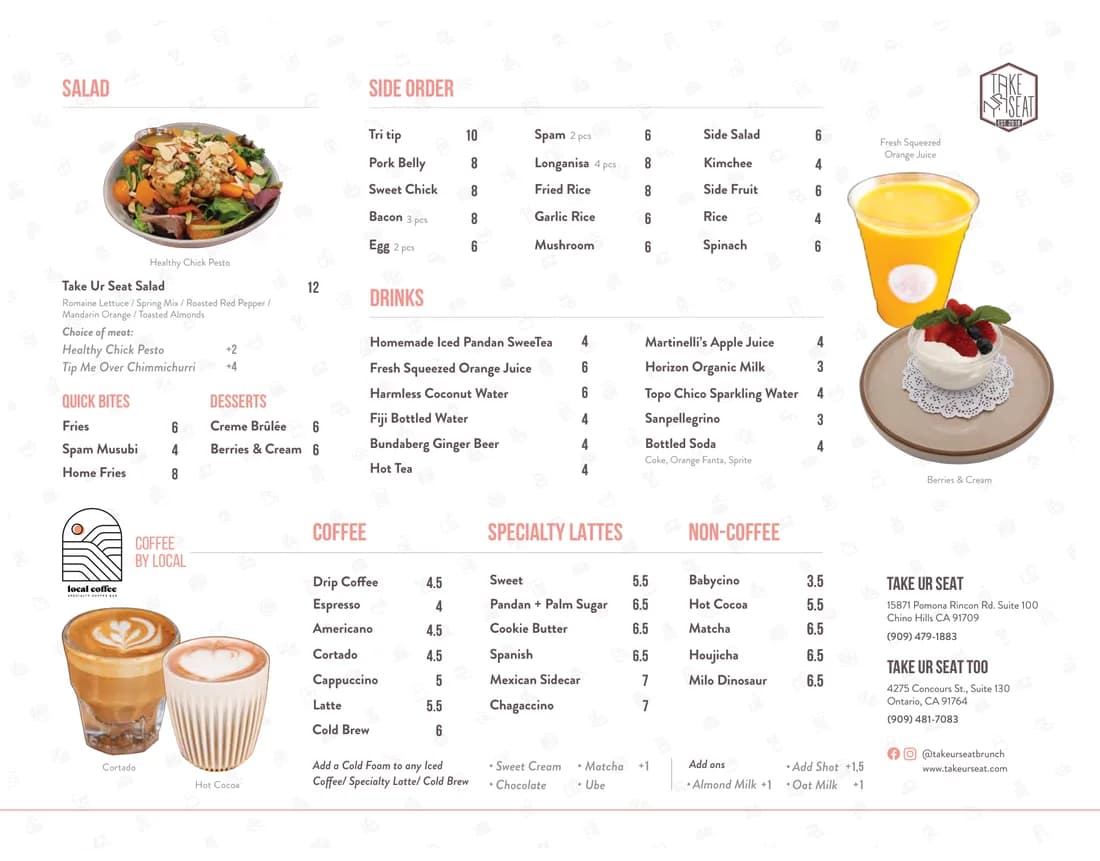
The dine-in menu, on the system the takeaway menu shares.
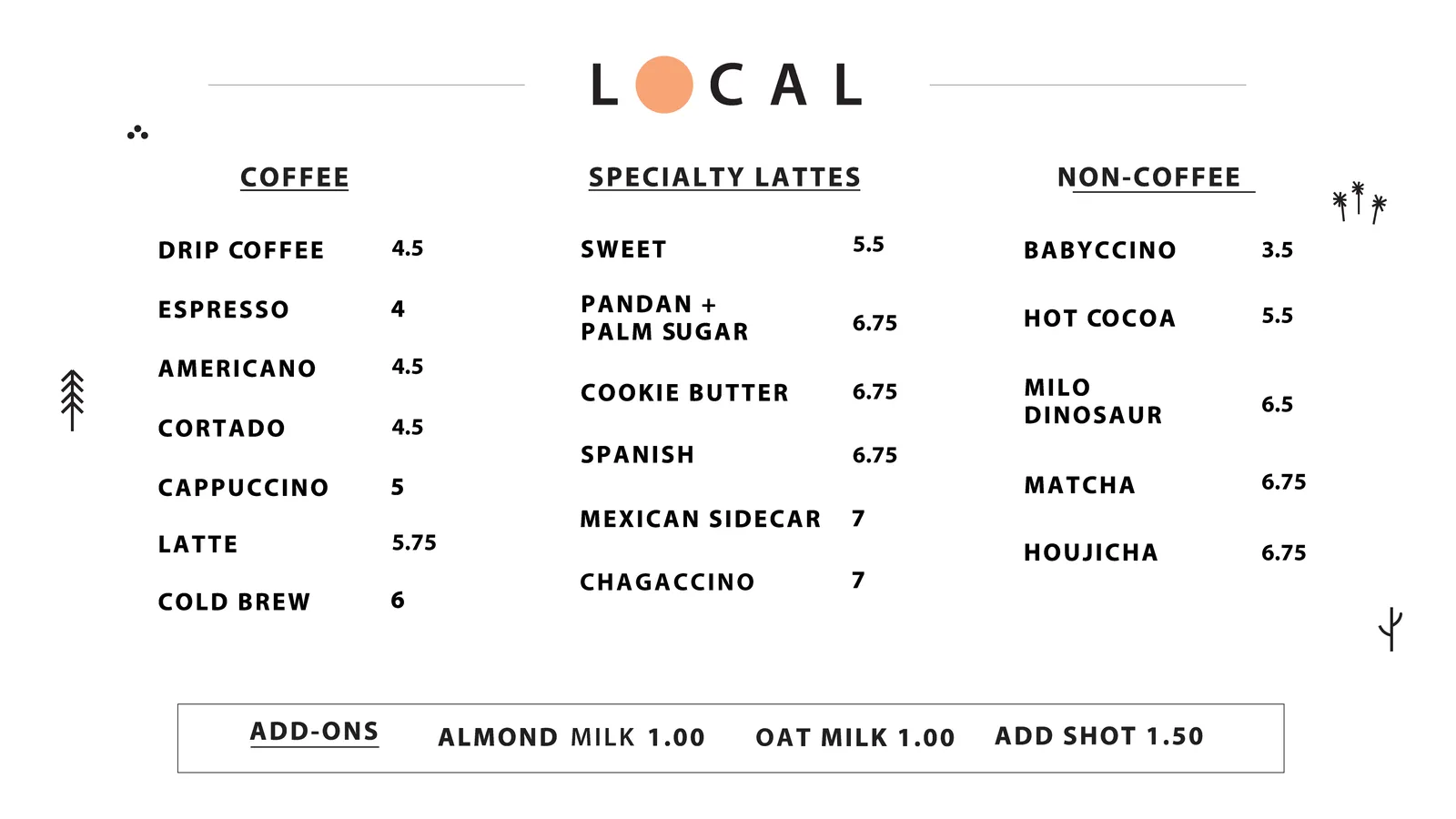
The boards behind the counter, updated alongside the kitchen.
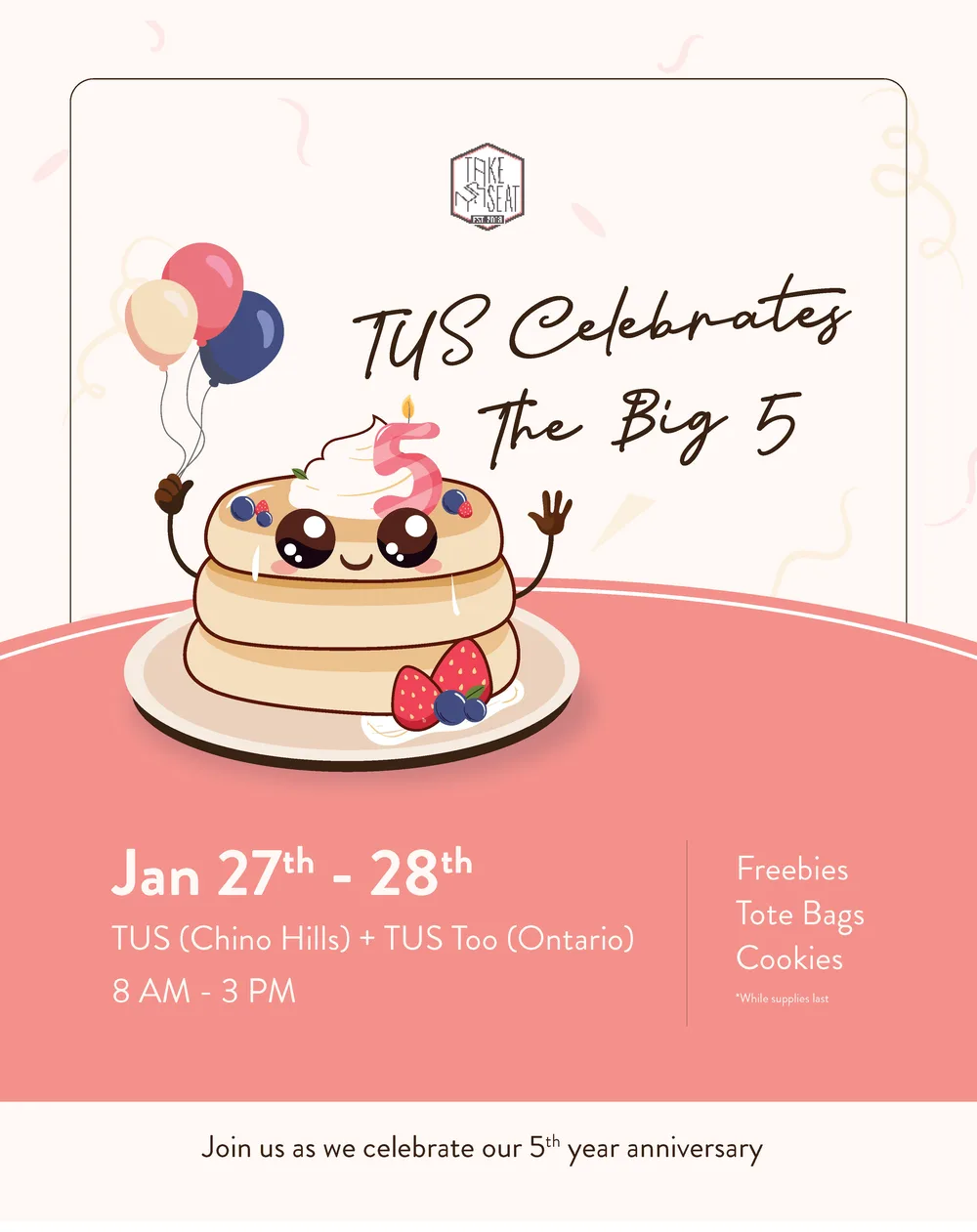
The anniversary campaign, run from a template, not redrawn.
The lite format, with its own standard on the flagship's system.
What was hard
The priority problem was not the design of any single piece. It was that no shared standard existed for how the brand should be reproduced, so every new request restarted the decision.
What we built
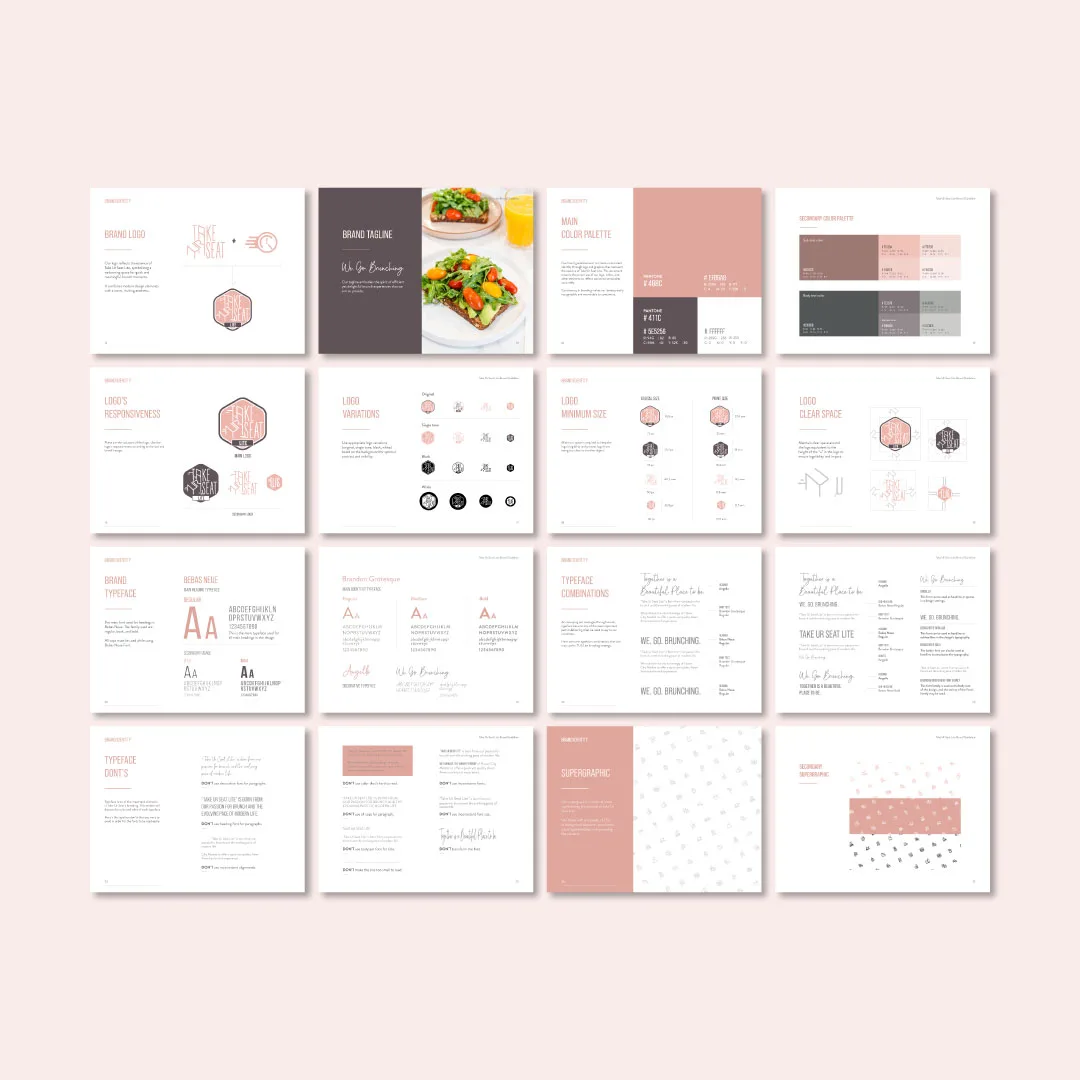
- Brand guidelines covering the mark, color, pattern, and photography direction
- Food and drink menu systems for dine-in and takeaway
- Seasonal campaign creative, including the Big 5 anniversary and mimosa season
- Instagram announcement and story templates
What changed
- Observable change
Menus, campaigns, social posts, and in-store screens now ship from one standard rather than being drawn per request.
- Observable change
Seasonal campaigns run to the calendar, with flyers and signage prepared ahead of each date rather than during it.
- Still being measured
Guest response by campaign and channel is not yet baselined. The next step is to agree on one indicator per campaign and review it after the season.
Group Creative Support
$3,950 a month
A brand already running, with work landing every week. Up to 3 concepts and 5 locations on one plan. One location? Focused Creative Support is $2,250 a month.
The opening kit
From $12,500
One opening with a date on it, and a list that has to arrive together.
What changes when one team runs all of it.
Every new one stays the brand.
Location three looks like location one.
The creative is ready before you open.
Menus, signage, and launch assets finished ahead of the date, not during the soft launch.
You stop being the art director.
Send the brief, approve the draft, go run the business.
One team owns the creative.
Printing, media, and shoots stay yours. The making does not.
From the sign to the sticker.
Six kinds of work, and a piece of each one.
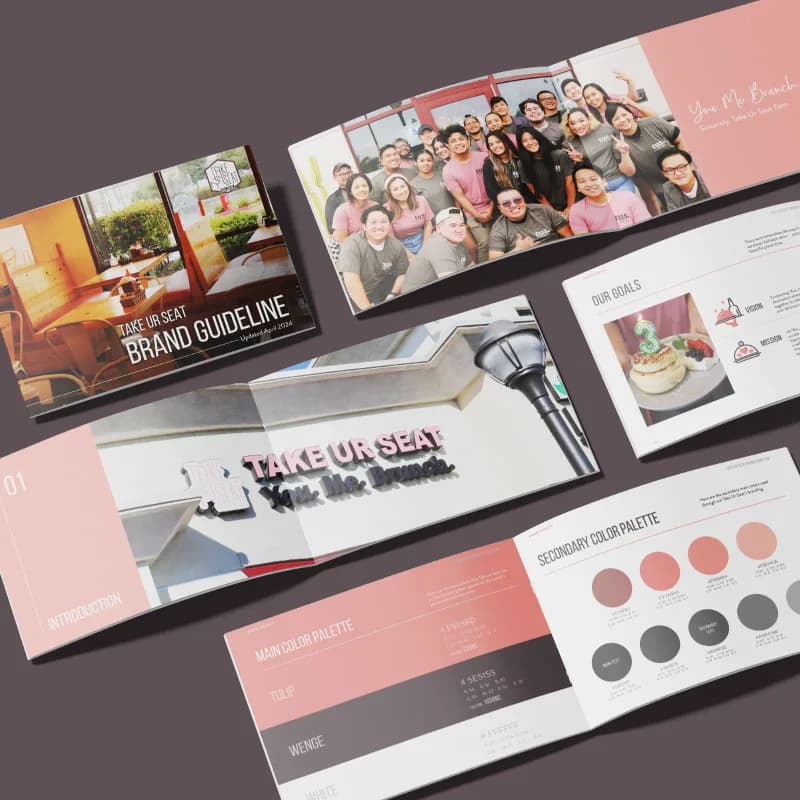
Brand standards.
The rules that let someone who is not you make it look like you.
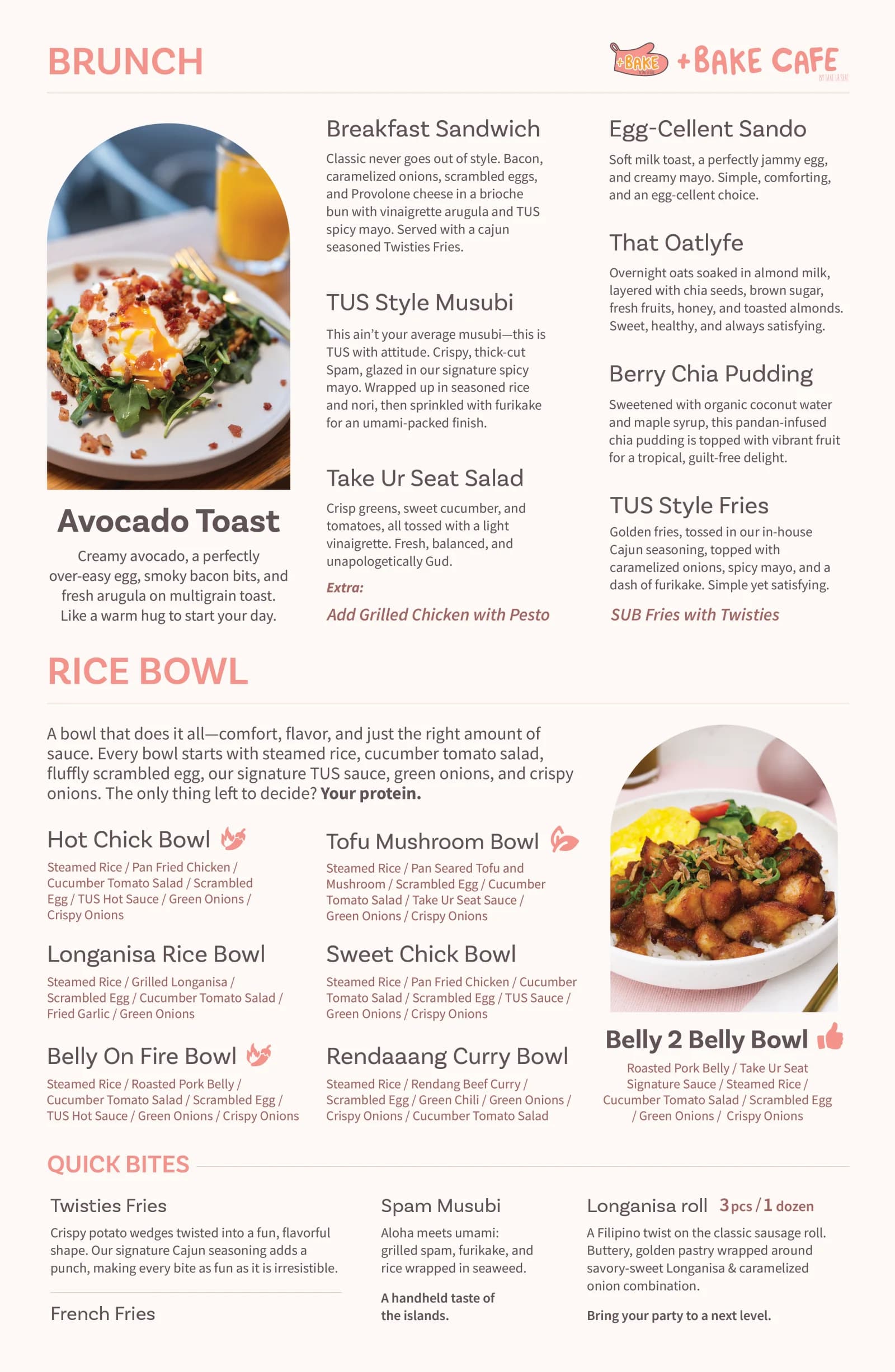
Menus and packaging.
Dine-in and to-go, cups, bags, boxes, labels.
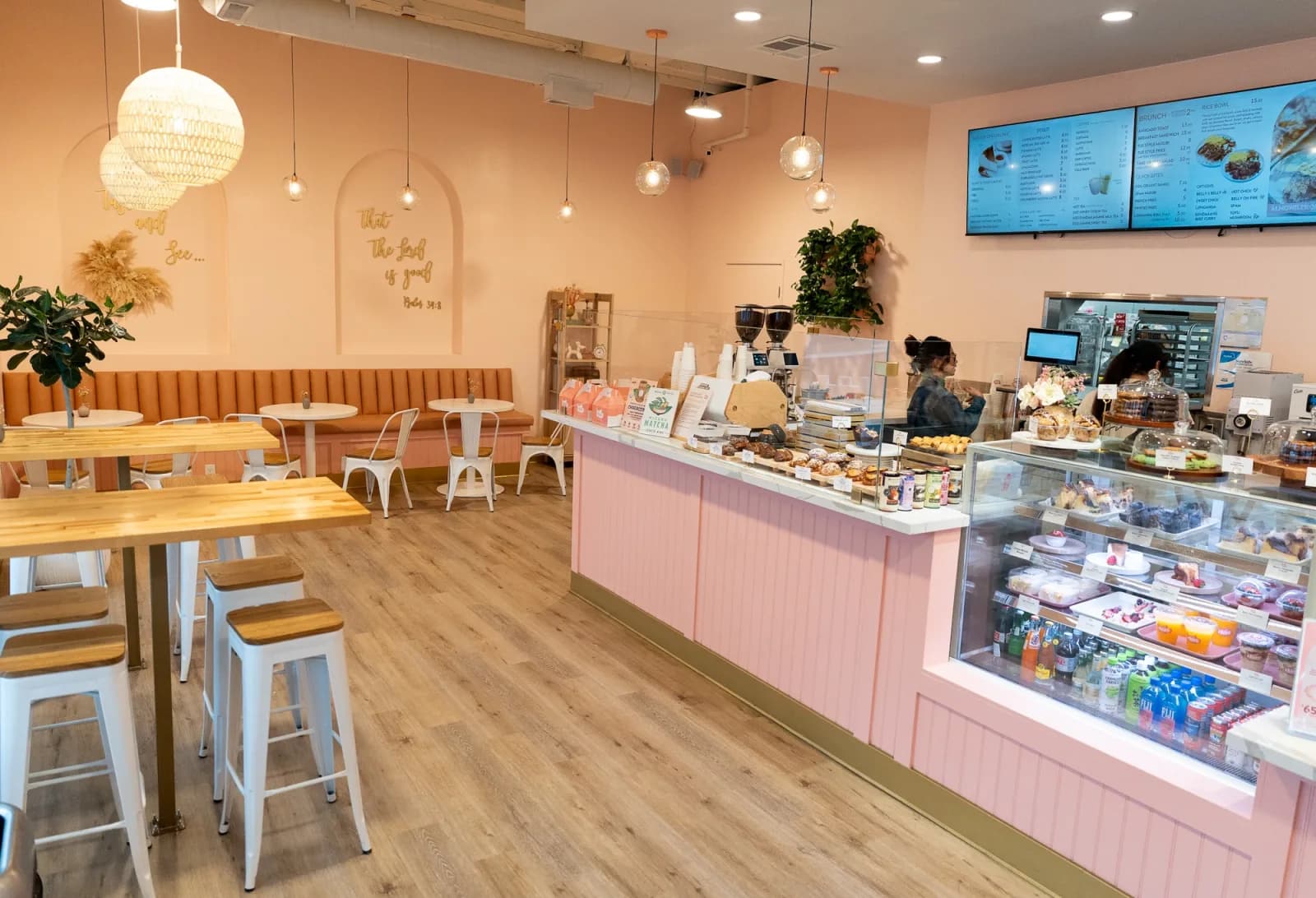
The next opening.
Everything the new location needs, on one dated timeline.
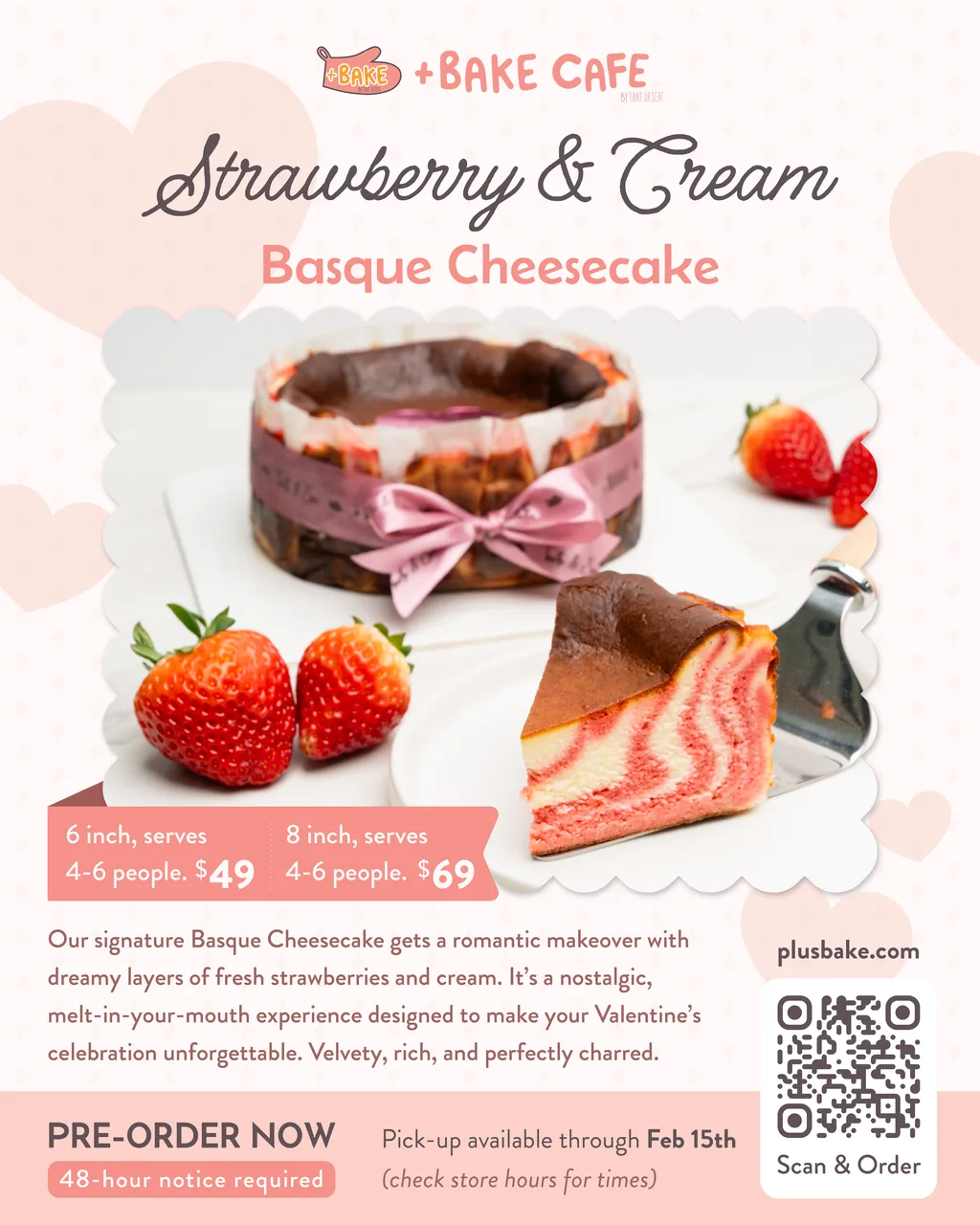
Campaigns and content.
Seasonal pushes, social templates, TV menu boards.
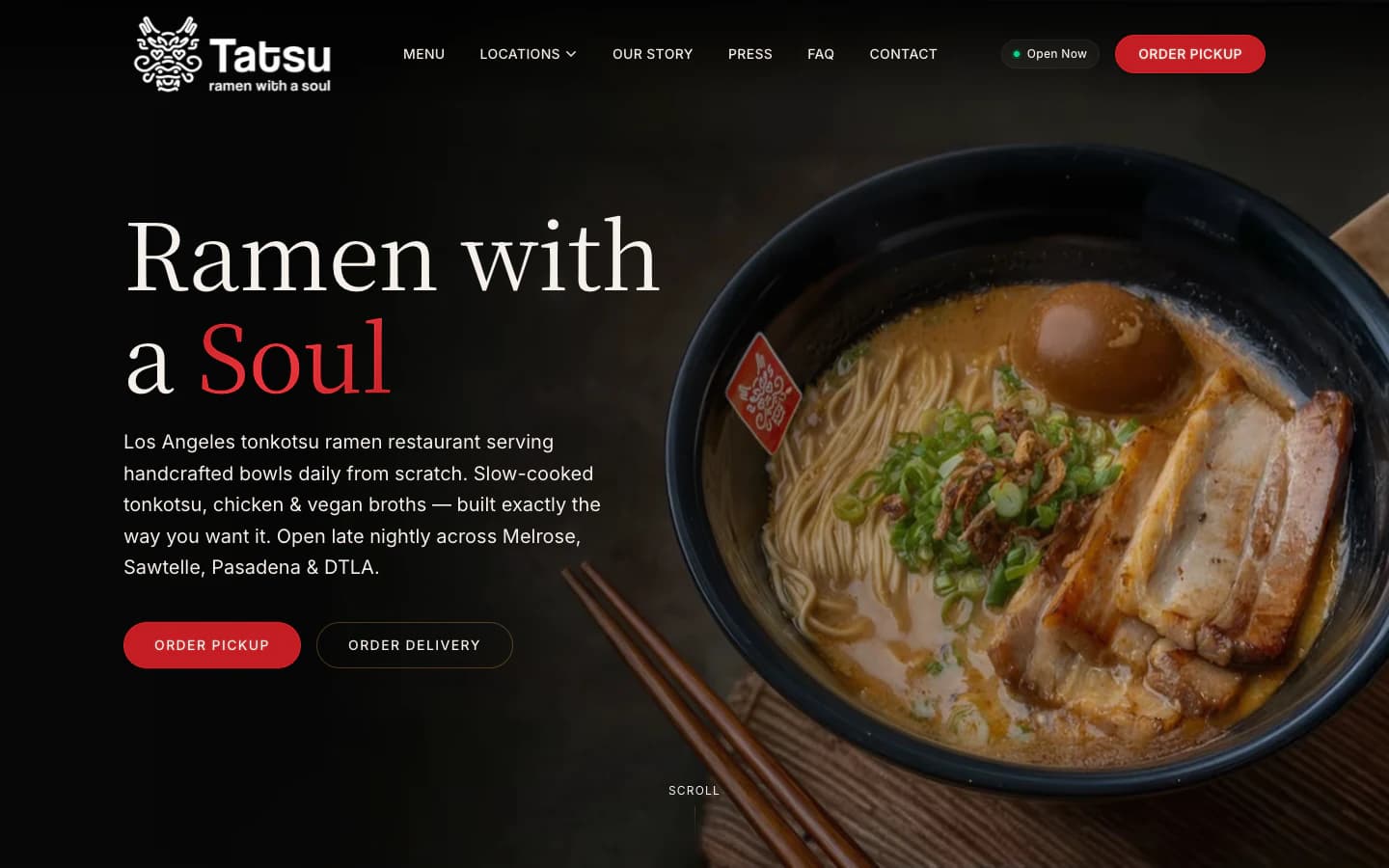
Websites and location pages.
The site, each location's page, the path to ordering.
The small pieces.
Item labels, seasonal stickers, care cards.
Not us: paid media buying, app development, long-form video. We will point you to someone good.
One February, for a three-concept group.

Week one
Valentine's pre-orders for the cafe, ready ten days early.
Week two
The flagship's anniversary campaign, signage to stories.
Week three
Spring menus across all three concepts, dine-in and to-go.
Week four
Mimosa season into production, and a location page refreshed.
Every piece here is work we produced for the Take Ur Seat family. They are grouped to show the shape of a month rather than to document one particular February.
How it works.
Send the brief, with its job.
Anything on the calendar: a menu update, an opening, a Valentine's push. We agree what the piece is for, to educate, convert, or retain, before anyone designs anything.
A first version to review.
We aim for a first version in 3 business days on Focused Creative Support and 2 on Group Creative Support. These are planning targets, not promises. Openings, websites, and brand standards get a dated schedule before work starts.
One project in production at a time.
So work finishes. You always know what is moving now and what is next.
We work on the kitchen's calendar, not ours. When a new drink lands, the screen, the shelf label, and the post move together, at every location.
Two ways to carry the creative.
Carry it in-house.
A designer on payroll, or specialists priced per piece. Both can make good work. Deciding what to make, holding one standard across every location, and chasing it between services stays with you.
Bring in one team.
One team that already knows the brand, on a stated production model: up to 4 standard requests a month on Focused Creative Support, or up to 8 shared across the group on Group Creative Support. One in production at a time, and the source files are yours.
One is a standing team. The other is a dated opening.
If the opening has a date on it, the kit is usually the place to start, and the team carries it from there. If the date is far enough out, the team can carry the opening too.
Group Creative Support
$3,950 a month
- Best for
- A brand already running, with work landing every week. Up to 3 concepts and 5 locations on one plan. One location? Focused Creative Support is $2,250 a month.
- How the work moves
- A standing queue you set the order of: up to 8 requests a month, shared across the group, one in production at a time.
- What runs at once
- One request in production, the rest queued behind it in your order.
- Timing
- We aim for a first version in 2 business days. This is a planning target, not a promise. Websites and brand systems are scheduled.
- What you keep
- Source files, every month.
- When it ends
- Give notice at least 30 days before a renewal date and your plan ends on that renewal date. Notice given later ends it at the following renewal date. No partial-month refunds, and you keep every file.
The opening kit
From $12,500
- Best for
- One opening with a date on it, and a list that has to arrive together.
- How the work moves
- A scoped project on one dated timeline, with the opening list agreed up front.
- What runs at once
- The full opening list, scheduled to land before the doors open.
- Timing
- An agreed six-week schedule, set against your opening date.
- What you keep
- Source files, plus the standards the unit after this one reuses.
- When it ends
- At handover. Continuing on the team from there is an option, not a requirement.
Neither includes: printing and production, ad spend, stock and font licenses, photo and video shoot days, quoted per day.
A good fit if
- You own your brand and run two to ten locations or concepts in Southern California, or the next one is signed.
- There is recurring creative work: menus, seasonal campaigns, location pages. An opening is a reason to start, not a requirement.
- You, or someone on your team, can approve a draft inside a day or two.
- Optional: you are thinking about franchising one day and want the brand consistent before you do.
Not a fit if
- You are a franchisee. Your brand comes from HQ, so these are not your creative decisions to make.
- You want one logo and nothing after it.
- Nobody can own approvals.
- You need paid media or app development before creative.
We take on founder-led brands in other industries when something specific is driving the work: a launch, a rebrand, a channel that stopped working. The diagnostic is how we find out whether we are the right team, before either of us commits to a month.
Questions operators ask.
Can you run several concepts without making them look like the same restaurant?
Yes. It is the thing we have done longest. Each concept keeps its own voice, menu, audience, and look. What stays the same is the hand making it and the standard it comes back at.
We are thinking about franchising. Can you help?
Yes. We do the creative side: the brand book, the standards, and the opening kit, so every unit is made from the same source instead of being redrawn locally. The legal and operational parts of franchising are not ours. If you franchise later, we can stay on as HQ's creative team.
What happens on the call?
We look at your menu, your social, and your newest location page beforehand. On the call we go through what is opening, what is late, and what still has to be made, then tell you straight whether we are the right team for it.
How fast do things come back?
We aim for a first version in 3 business days on Focused Creative Support and 2 on Group Creative Support. These are planning targets, not promises. Openings, websites, and brand standards get a dated schedule before we start, so you know what lands when.
Why one project in production at a time?
So work finishes. You always know what is moving now and what is next, instead of tracking six half-done briefs across five people.
How does a monthly plan end?
Give notice at least 30 days before a renewal date and your plan ends on that renewal date. Notice given later ends it at the following renewal date. No partial-month refunds, and you keep every file.
Do you still work with Take Ur Seat?
Yes. They are the reason the studio exists, and they are still on the calendar. That is how we know the system holds up across openings, not just one launch.
A straight answer on whether we are the right team.
Thirty minutes. We look at your menu, your social, and your newest location page first, then tell you what one team could carry for you and what it would cost. No concepts, no plan document: those are separate, paid pieces of work.